

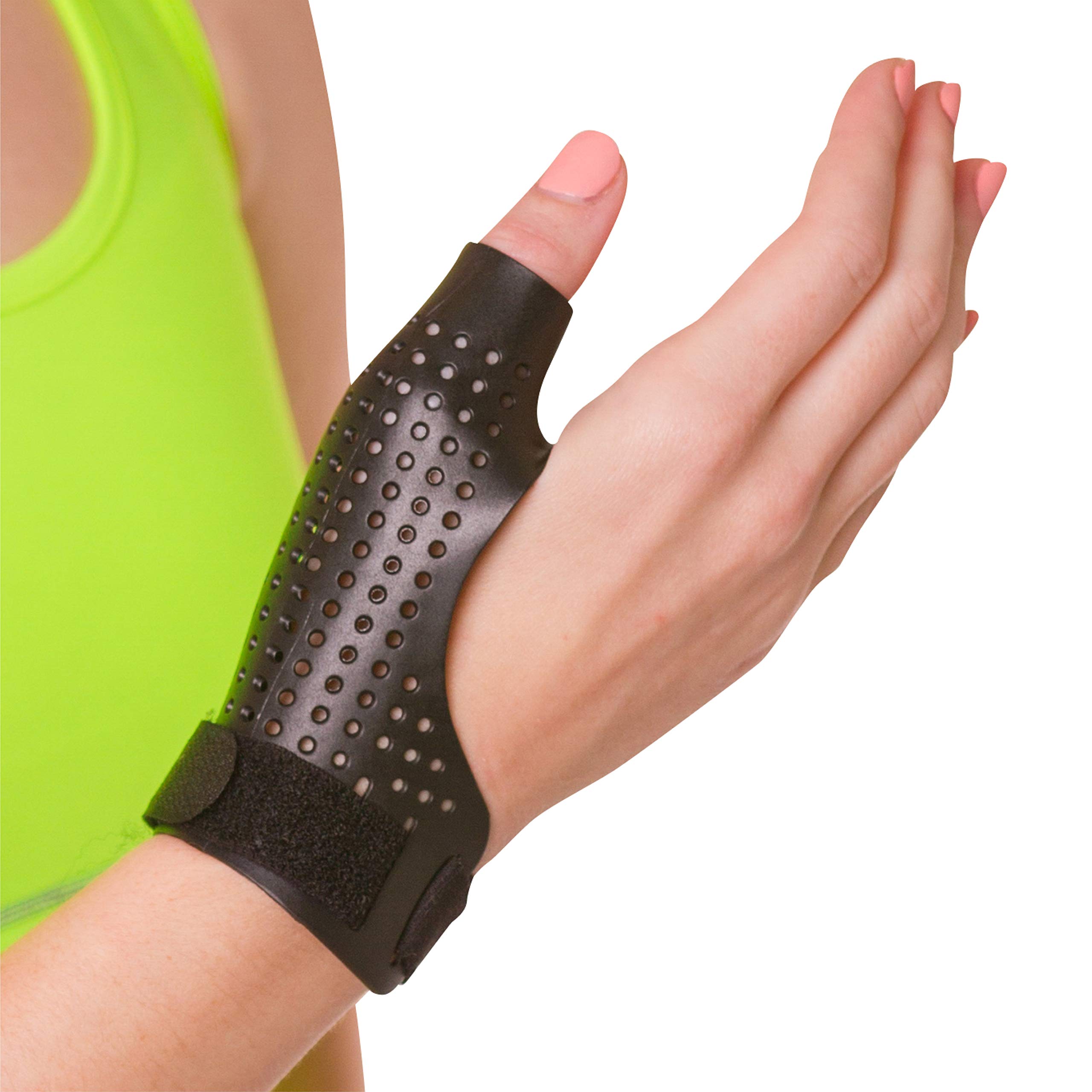
Thumb pain can make everyday tasks, such as opening a jar, turning a key or using a phone, uncomfortable. Thumb splints can provide targeted support, helping to stabilise the joint, reduce unwanted movement and make certain activities more comfortable.
The type of support you need depends on what’s causing your symptoms. Here’s how thumb splints can be used for hypermobility, arthritis and trigger thumb, as well as what to consider when choosing one.
What Is The Difference Between A Splint, Brace And Support?
A splint is generally designed to restrict or control movement, often using a more structured component to provide stability. A brace can also support and stabilise a joint but might allow more movement while doing so. Support is a broader term that can describe both structured and softer, more flexible designs.
The terminology isn’t always consistent between manufacturers, so a product described as a thumb brace might offer similar support to one marketed as a thumb splint. Rather than relying on the name alone, consider which joint it supports, how much movement it restricts and how it fits.
Thumb Splint Support For Hypermobility And Joint Stability
Hypermobility can cause a joint to move beyond its usual range. In the thumb, this can contribute to weakness, instability or discomfort during gripping and pinching.
A thumb splint can provide stability while still allowing useful movement. Depending on the design, it might help to:
- Stabilise an unstable joint
- Restrict excessive movement
- Support a weak or sore thumb
- Make gripping and pinching more comfortable
The amount of restriction needed will vary. Some people need a flexible support that allows a good range of thumb movement, while others might benefit from firmer support around a particularly unstable joint.
If the wrist is also affected, a wrist and thumb support or wrist and thumb brace might provide support across both areas.
Thumb Support For Arthritis And CMC Joint Thumb Pain
Thumb arthritis commonly affects the carpometacarpal (CMC) joint at the base of the thumb, where the thumb meets the wrist. This joint allows a wide range of movement but is also placed under considerable stress during gripping and pinching.
A thumb support for arthritis can help stabilise the joint and reduce movement that aggravates symptoms. Splints for arthritis are often used when particular activities cause pain, rather than being worn continuously.
They might provide:
- Support when the joint feels weak
- Relief when the thumb becomes sore or painful
- Greater stability during gripping and pinching
- Support during periods of pain and swelling
Keeping the thumb moving and maintaining strength can also be important. A splint isn’t necessarily intended to replace normal use of the hand, and an appropriate exercise programme might be recommended alongside other treatment.
Thumb Spica, Wrist Brace And Wrist Support Options
There are several types of thumb supports, and they don’t all provide the same level of restriction.
A thumb spica supports the thumb while restricting some movement. Depending on its design, it can extend towards the wrist, making it useful when both areas need support. A wrist brace, on the other hand, primarily supports the wrist and might not provide enough stability around the thumb joint.
Other options include:
- Soft wrap-around supports for lighter support
- Firmer braces for greater restriction
- Adjustable designs for a more precise fit
- Wrist and thumb supports when both areas need stabilising
- Malleable or structured supports that can be shaped or adjusted where appropriate
The right option depends on which part of the hand is affected and how much movement you need to retain. There isn’t one universal support that’s suitable for every person or condition.
Adjustable Thumb Supports And Wrist & Thumb Braces In The UK
An adjustable thumb support can make it easier to achieve a secure fit around the hand. Some designs use straps or fastenings that can be altered according to the level of support required.
A wrist and thumb brace can be useful when symptoms affect both areas, while a thumb-only design might be more practical when the wrist doesn’t need additional support.
When comparing supports, consider:
- How much movement you need to retain
- Whether the wrist also needs support
- How easy the fastening is to adjust
- Whether the support feels comfortable during use
- Whether you can put it on and remove it independently
Some wrap-style supports use Velcro straps, making them easier to adjust throughout the day.
Elastic Thumb Supports, Compression And Breathable Materials
Not every support uses rigid splinting. An elastic thumb support can provide a closer, more flexible fit while allowing you to continue using your hand. This might be useful when you need some support but don’t want to significantly restrict movement.
Some supports also provide light compression, which can create a secure feeling around the thumb and hand. However, compression isn’t the same as joint stabilisation, so a compressive support isn’t automatically suitable when firmer control of movement is needed.
Neoprene is another common material for soft supports. It offers flexibility while providing some structure, and breathable sections can make a support more comfortable during longer periods of wear.
You might also come across wrap-style supports with Velcro straps, which allow the level of tension to be adjusted.
Thumb Support or Arthritis Gloves For Arthritis Finger Pain
A dedicated thumb support for arthritis isn’t the only type of product available for hand symptoms. Arthritis gloves are designed to cover the hand and fingers and are generally different from a splint that specifically supports the thumb joint.
Gloves might be considered when several fingers or the wider hand are affected, while a thumb splint can provide more targeted support around a painful or unstable joint.
It’s also worth considering whether your symptoms involve the wrist, fingers or thumb. For example, carpal tunnel syndrome can cause pain, tingling, numbness and weakness in the hand and thumb area, but a thumb splint isn’t necessarily the appropriate support for those symptoms.
Thumb Splint Size, Measurement And Fit
Getting the size right is important. A support that’s too loose might move around instead of providing consistent support, while one that’s too tight could cause pressure, rubbing or discomfort.
Most manufacturers provide a measurement guide based on areas such as the hand, wrist or thumb. Your usual glove size isn’t necessarily the correct size for a splint, so check the individual product’s sizing instructions before buying.
An adjustable support can make it easier to achieve a secure fit. Look for features such as:
- Adjustable straps or Velcro straps
- A wrap-around design
- Comfortable edges
- Breathable materials
- Clear fitting and washing instructions
The support should feel secure without causing excessive pressure, numbness or irritation. If a splint is rubbing or making an already painful or sore area worse, it might need adjusting or replacing.
Epitact Flexible Thumb And Epitact Rigid Splint Options
Splints range from soft, flexible supports to more structured designs. An Epitact flexible thumb support, for example, allows more movement than a rigid design, while an Epitact rigid splint provides greater restriction.
Some supports are made from materials that can be adjusted to the shape of the hand, while malleable or thermoplastic designs can sometimes be shaped by a healthcare professional.
The most suitable option depends on:
- The condition being treated
- Which joint needs support
- How much movement needs to be restricted
- Whether support is needed during daily activities or rest
An occupational therapist or other healthcare professional can provide expert advice if you’re unsure which type of support is appropriate.
Trigger Thumb: When A Splint Can Help Stabilise Painful Movement
Trigger thumb occurs when the tendon that bends the thumb becomes thickened and doesn’t glide smoothly. This can cause clicking, catching or locking, as well as pain and stiffness around the affected area.
A splint can help restrict the movement that causes the tendon to catch. Depending on the individual, it might be recommended at night or during particular activities.
During recovery, it can also be important to allow appropriate movement rather than keeping the thumb completely still. Splinting might be combined with exercises or other treatment depending on the cause and severity of the symptoms.
If your thumb continues to lock, becomes increasingly painful or starts interfering with normal daily activities, seek professional advice.
When To Seek Expert Advice For Sore Or Painful Thumb Symptoms
Not all thumb pain is caused by arthritis, hypermobility or trigger thumb. Injuries, tendon problems and conditions affecting the wrist or hand can cause similar symptoms.
Speak to a healthcare professional if your pain is persistent, getting worse or affecting normal activities. You should also seek advice if you experience tingling, numbness, significant weakness or difficulty moving the thumb.
A GP, hand therapist or occupational therapist can help identify the likely cause and provide expert advice on whether a splint, exercise, activity changes or another form of treatment is appropriate.
