

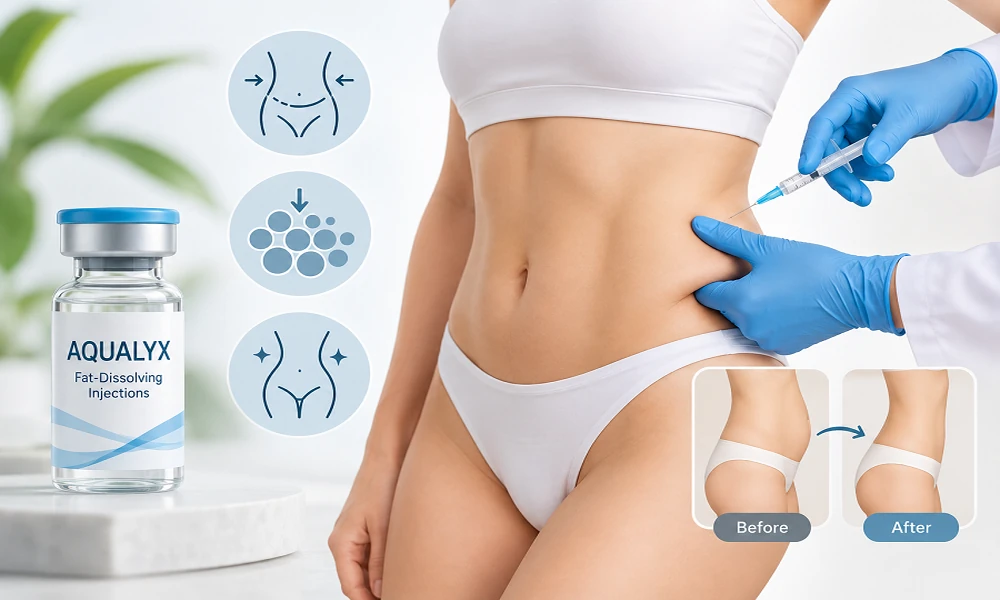
Stubborn pockets of fat that don’t respond to diet or exercise are one of the most common aesthetic frustrations – a small area under the chin, along the flanks, or on the inner knees that seems immune to lifestyle changes. Aqualyx has become one of the better-known non-surgical options for these localised areas, but it’s worth understanding what it can and can’t realistically achieve before considering it.
What Aqualyx actually is
Aqualyx is an injectable solution based on deoxycholic acid, a substance the body already produces naturally to help digest dietary fat. When injected directly into a targeted pocket of subcutaneous fat, it works by breaking down the membrane of fat cells, which then release their stored contents to be processed and cleared by the body’s normal metabolic and lymphatic pathways over the following weeks. This is why results build gradually rather than appearing overnight.
Where it’s typically used
Aqualyx is designed for small, localised fat deposits rather than broad-scale fat loss – it isn’t a substitute for weight loss or a treatment for larger areas better suited to surgical options. Common treatment areas include:
- Under the chin and along the jawline
- Flanks and “love handles”
- Abdomen and above the hips
- Inner and outer thighs
- Upper arms and the bra-line area
Because it targets fat cells directly at the injection site, a thorough consultation should include an honest conversation about whether a particular area is genuinely suited to this approach, or whether it’s more of a skin-laxity or muscle-tone issue that fat-dissolving injections won’t meaningfully change.
What a treatment course looks like
A single session rarely produces the full result. Most protocols involve a course of two to four sessions, spaced several weeks apart, to allow the body time to clear the fat cell contents from each round before the next is planned. Session length and product volume depend on the size of the area being treated, and a practitioner should tailor the dose to the individual rather than applying a fixed amount regardless of anatomy.
Swelling is the most noticeable short-term effect, often more pronounced than people expect, along with tenderness, firmness, and sometimes bruising in the treated area for several days to a couple of weeks. This is a normal part of the body processing the treatment rather than a sign of a problem, but it’s worth planning treatment dates around this – most people prefer not to have a course close to an event where the treated area will be on display.
Recovery and realistic timeframes
- Initial swelling: typically peaks within the first 48-72 hours
- Firmness or lumpiness: can persist for one to two weeks as the body clears the affected cells
- Visible change: usually becomes noticeable from around three to four weeks after each session
- Full course results: most protocols are assessed six to eight weeks after the final session
Compression garments, gentle movement, and adequate hydration are commonly recommended during the weeks between sessions, since the lymphatic system plays a direct role in clearing the released fat content.
Who should think twice
Aqualyx isn’t appropriate for everyone. People with significant loose or lax skin in the treatment area may find that removing fat volume makes skin laxity more noticeable rather than less, since the treatment doesn’t tighten skin itself. It’s also not intended for anyone who is pregnant or breastfeeding, has certain blood-clotting conditions, or has active skin infections in the area to be treated. A responsible provider will screen for these before agreeing to treat.
Choosing where to have it done
Because Aqualyx involves a bioactive substance being injected into the body, the quality of the assessment matters as much as the injection technique. Clinics that are explicit about being doctor-led – for instance, Dr L’Art’s Aqualyx service in London – tend to frame the treatment around a personalised course plan rather than a single generic session, which is broadly consistent with how the product is designed to be used.
The bottom line
Aqualyx can be a genuinely useful tool for small, stubborn fat pockets that haven’t responded to lifestyle changes, but it works gradually, in a course, and only in the right candidate. Anyone considering it should go in expecting swelling before improvement, several sessions rather than one, and a provider willing to say honestly whether their problem area is actually a good fit.
