

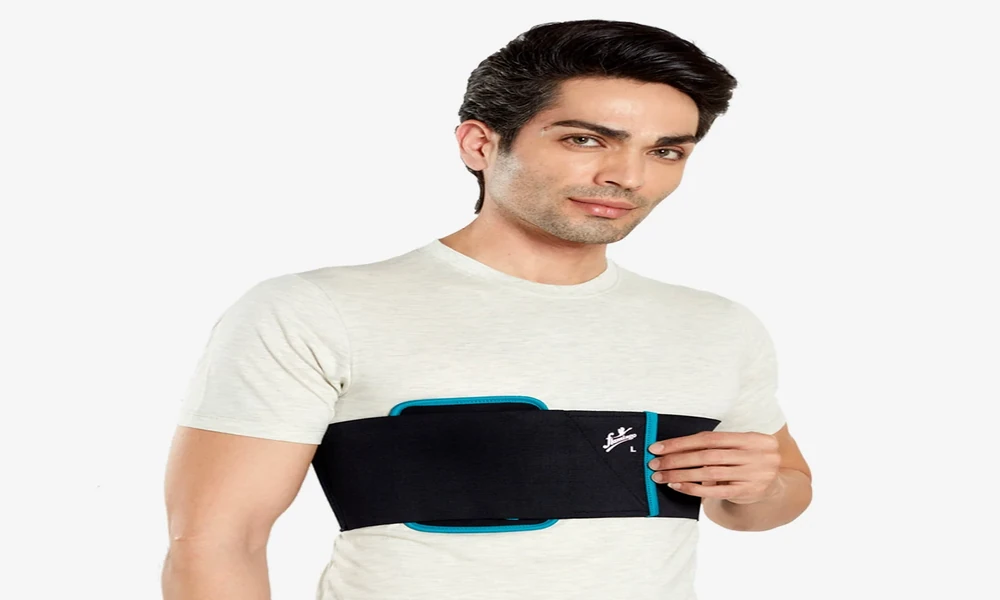
Rib injuries can often make everyday things really difficult. But the use of a rib belt can make a difference for those recovering from a cracked rib or a pulled chest muscle.
The orthopaedic belt wraps snugly and firmly around your chest to keep you stabilized, breathing and coughing without quite as much discomfort. The belt will be of assistance only if worn correctly.
A too loose belt keeps sliding down your stomach and won’t help support your injury and might make it hard to breathe. This could even increase the chances of getting a lung infection. That is why it is essential to pick the correct size.
In this blog, we will help you to find the best fit, designed for both men and women, with steps that are easy to follow.
How to Measure Your Chest Accurately
You should never try to guess your rib belt size using your regular shirt size. Different clothing brands can have very different sizing, and a rib belt must fit your real body measurements to give proper orthopedic support. To make sure you get the correct size you will want a flexible tape measure.
For an accurate number, simply stand up normal, the same you naturally do without holding your body rigid. Do not pull your stomach inward and out your chest forward, since that number will change. Put the tape measure around your chest, keeping it flat and level across your back. Measure Do right after you exhale normally. Don’t hold it.
Note the number in both inches and centimeters would be different, since brands use different units on their size charts. If your size is exactly in the middle of two options, it’s usually better to go with the bigger one so the straps can be adjusted comfortably.
Basic Differences in Fit for Men and Women
Men and women both have different chest shapes, so the belt that works perfectly on a man may be uncomfortable or unusable for a woman. These variations in your body can allow you to select a belt which provides sufficient support without being too tight and irritating.
- Men’s Rib Belts: Men usually have a torso that is straight, cylindrical, or V-shaped. A regular, straight-cut rib belt is ideal for them. The belt should go around the rib area smoothly, typically positioned just under the armpits, depending on where the injury is.
- Women’s Rib Belts: Women have a shaped chest area because of their breast tissue. A flat, thick belt can push down on the breasts, leading to rubbing, difficulty breathing, and uneven pressure. To avoid this, women should choose a rib belt that is shaped to fit. These have a specific cutout or curve along the top that rests underneath the chest area for a comfortable fit.
Steps to put your belt on
Wearing a rib belt for male is the right way to spread the pressure evenly over your injured area.
- Belt adjustment: Undoing the hook-and-loop straps fully. Position your body belt in the center of your back.
- Align the Support: Move the belt into position so that the main part of the compression area is on the top of your broken or cracked rib.
- Breathe Out Completely: Slowly release the air in your lungs. This makes your chest wall smaller and gives you a good purchase.
Conformability Settings: The material should be free of wrinkles or creases to avoid irritating your skin. Signs Your Rib Belt Fits Perfectly
A well-fitting rib belt is meant to give you instant comfort, helping relieve the pain you feel while moving or breathing.
The easiest way to check if the belt fits properly is the two-finger test. Try to slide two fingers flat under the edge of the belt. If your fingers go in with a little resistance, the fit is right. If you can fit your whole hand under the belt, it’s too loose and won’t hold your ribs in place. Also, check how you breathe right away. The belt should feel tight but still your chest can move freely. The belt is fitted perfectly if you can talk without getting out of breath and your everyday movements feel more stable and protected.
Rib Belt Sizing and Fit Checklist
| Sizing Step | Action Items | What to Avoid |
|---|---|---|
| Measuring | Use a fabric tape measure at the end of a relaxed exhale. | Do not hold your breath or use your t-shirt size. |
| Selecting Style | Men use straight cuts; women use contoured under-bust cuts. | Avoid straight, thick bands if they crush breast tissue. |
| Testing Tightness | Ensure you can fit exactly two fingers under the fabric. | Do not pull it so tight that you cannot speak easily. |
| Checking Health | Experiencing short of breath, discontinue usage immediately. | Never use a belt 24/7. Take breaks in between. |
Wrapping Up
It is essential to get the correct size and fit for a rib belt to recover safely from a rib injury. Take measurements while breathing out on an exhalation at your normal rate, then select a properly sized belt of the proper style and gender. This helps prevent extra stress on your body.
A rib belt should help you move without restricting your routine work. The belt should be snug but not uncomfortable. Check it by using the two-finger test and focus on how your lungs feel. With the correct fit and size, you can alleviate your pain and take better care of your breathing.
